|
The
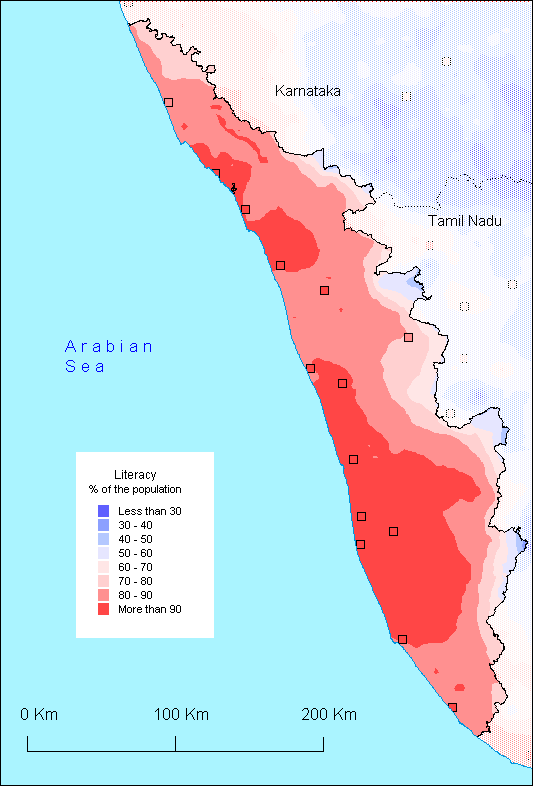
State's success in combating illiteracy is well-known and this
feature has greatly contributed to the debate about the so-called
"Kerala model" of which educational progress, low infant mortality
and early fertility decline are the central ingredients. As
a consequence, present-day literacy rates are now almost as
high in rural areas when the urban-rural gap is sizeable anywhere
else in India.
The
advance of education originated in the Princely States right
from the 19th century and this explains why the former territories
of Travancore and Cochin (Kochi) still figure prominently on
the map with some the highest literacy scores recorded in the
county. More than 95% of the women are literate in some areas
of the Kottayam district where Syrian Christians form the dominant
group. Rates are very high in the north of the State as around
Kozhikode city, but on the whole, the former region of Malabar
that was directly administered by the British (as part of the
then Madras Presidency) tend to lag behind. This is especially
about Malappuram district where the lowest values are recorded.
Another
interesting feature is the way the regional division into lowlands
and highlands gets reflected on the map. Illiteracy tends to
gradually increase with altitude, a geographical pattern that
is related mainly to the composition of the population found
in the mountainous areas (tribal groups, plantation workers,
etc.). Kerala lowlands partake of a littoral region that stretches
up to Goa and that possesses many typical features such high
density, high literacy, low fertility and higher family size
(many more characteristics can be observed on our atlas).
C.Z.G.
|