|
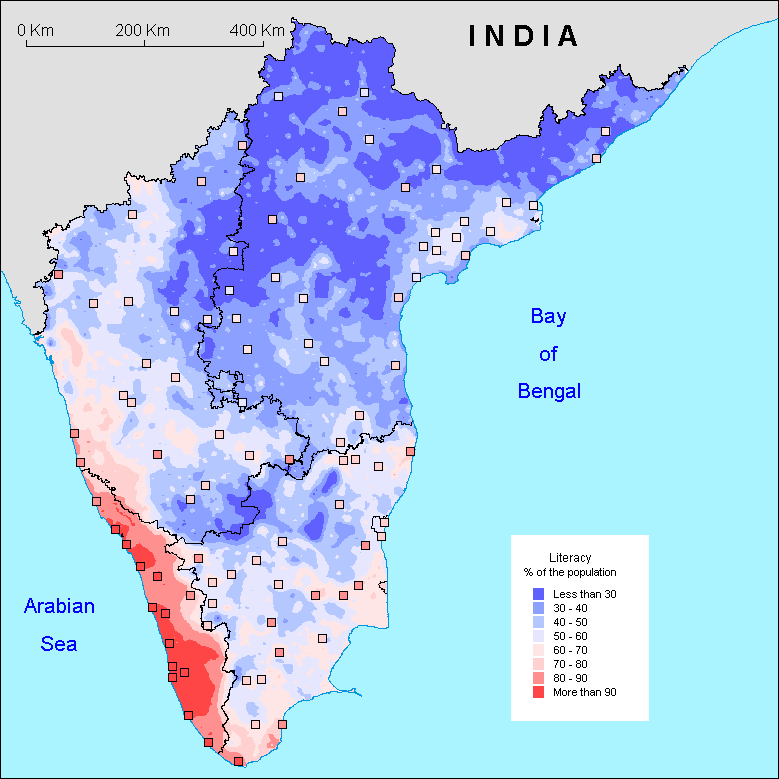
The map of literacy rates in South India depicts an extremely diverse landscape with the most spectacular educational achievements lying next to some of the worst literacy scenarios encountered in India. While the South-West record almost total literacy, values observed along the border with Maharashtra, Madhya Pradesh or Orissa are distressingly low. While the literacy rates may be lower than 30 % for the total population, female literacy is even lower in these latter areas and rates around 15% are not uncommon.
Kerala strikingly stands apart with the highest literacy rates in red that clearly demarcates this State from the rest of the region. In contrast to some other variables examined in this atlas, State boundaries are actually not entirely blurred as significant variations along the Kerala borders (or along the Andhra Pradesh borders) clearly demonstrate. This indirectly underlines the role played by regional educational policy in shaping the social development of each State and the impressive success attained by Kerala in banishing illiteracy.
In
most States, literacy differentials remain however noticeable
across districts. Most visible is the advantage of the urban
population whose literacy rates are at times double those observed
in the surrounding countryside. In cities, the supply of school
infrastructures (both public and private) is of course of much
better quality and the need for education is exacerbated by
economic development. In the countryside, tribal
pockets that often correspond to isolated forested
tracts come out clearly on the map of each state with the
lowest literacy values. Although other groups such as farm labourers
or Dalits may also suffer from a clear handicap in terms of
school supply, tribal communities are particularly disadvantaged
as they are often concentrated in less accessible hilly areas.
C.Z.G.
|