|
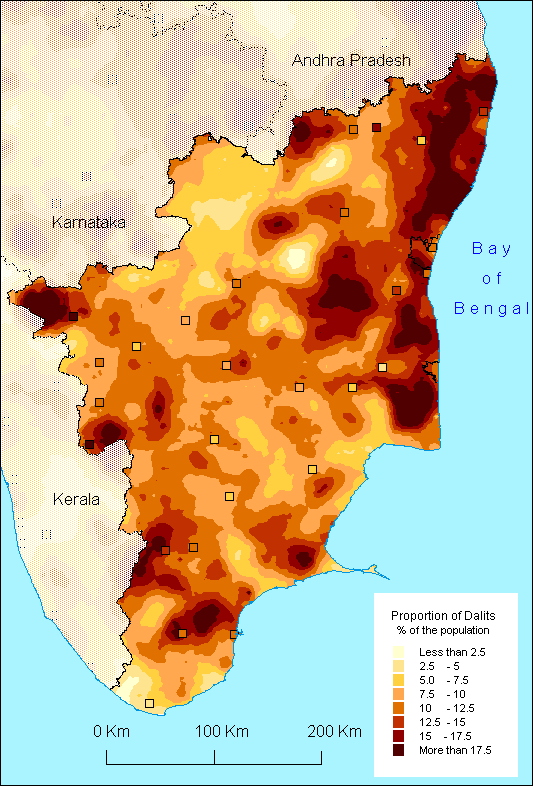
Scheduled castes are numerous in Tamil Nadu (19 % on average). Three main groups can de distinguished. The most important numerically are the Paraiyan, who spreads all over the state. Inside this group, the Adi Dravida, who are mainly localized in the northeastern part of the Tamil Nadu, can be distinguished from the others, particularly from Paraiyan Sambavar, who are distributed more in and around the Kaveri delta. The second group are the Pallans, which live in the south of Tamil Nadu. Finally Chaakiliyans form the third group and are concentrated on the Coimabtore plateau. Many other small groups of SC live in Tamil Nadu, of which, the Valluvan and the Kuravan-Sidharan may be mentionned.
The spatial pattern of these groups seem very disturbed. High percentage of dalit population are adjacent to very low ones. All along the Coromandel coast is the biggest concentration area, where SC, mainly Paraiyan (particularly Adi Dravida), are more than 20% of the total population. In opposition, the inlands show a rather low level of dalit population. Of course, in regions of high tribal concentration (Chitteri, Kalrayan, Javadi and Elaghiri hills) there is no other population present, but in Dharmapuri district, we are surprised by the low rate of SC. Low agricultural intensity and absence of industry may explain it, but historical factors are certainly important too.
The center of Tamil Nadu has an average level of Dalits. Chakkiliyan are the most important group in the Coimbatiore-Salem region, and the Pallans occupied mostly the region in the south of Trichy and further beyond. The extreme south of Tamil Nadu, and particularly the Kerala border show a very low level of SC. A different social organisation (we are here in the former Travancore kingdom), as well as a bigger influence of catholicism (particularly in the south of Tuticorin) may be an explanation for this situation.
S.O.
|