|
Kerala
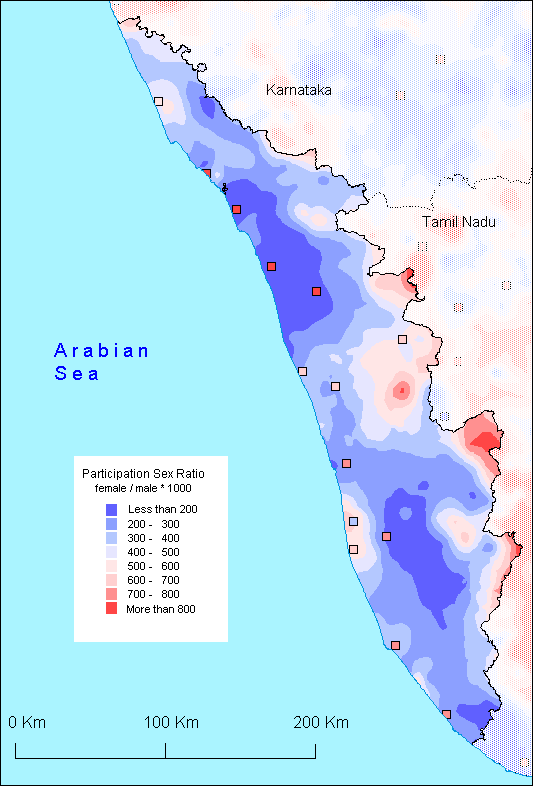
distinguishes itself by a rather low participation sex-ratio.
It is quite surprising to see such a low level of women working
in Kerala, because there the women are well educated (see the
literacy map) and do not suffer from
discrimination as in the rest of India (see the general sex-ratio
map).
As usual on maps of Kerala, the level of value changes according to the distance from the coast. But the general tendency is disturbed here and there : around the city of Kasaragod, and in the Backwaters. In the inland, the visual correlation between tribal areas and places where women are working more is evident. These two points may lead us to an explanation of participation sex ratio in Kerala: women's work in Kerala is not a sign of the high status of women, but is more dependant on the local level of development. Regions on the coast with a high sex-ratio are also regions with the lowest level of industry and services. And the tribal situation in Kerala is proportionnaly not better than the tribal situation in the rest of South India.
But cities do the opposite as they have a high sex-ratio, despite their level of development. Anyhow, no clear pattern can be viewed on the map, as one city (Shertalhai) has a very low sex-ratio in a high sex-ratio area, and cities with the higher sex-ratios are located in the rural area with the lower sex-ratio… No simple explanation may be given. A closer examination city by city would definitly be necessary, as cities participation sex-ratio may be dependant on local factors.
S.O.
|